

No one walks into a shift thinking about “data integration.”
They think about patients.
But within minutes, the reality sets in:
✓ Log into one system.
✓ Check another.
✓ Document vitals.
✓ Verify what was entered.
✓ Move to the next patient.
✓ Repeat!
It’s not one major disruption.
It’s a constant series of small interruptions.
And over time, that’s what slows everything down.
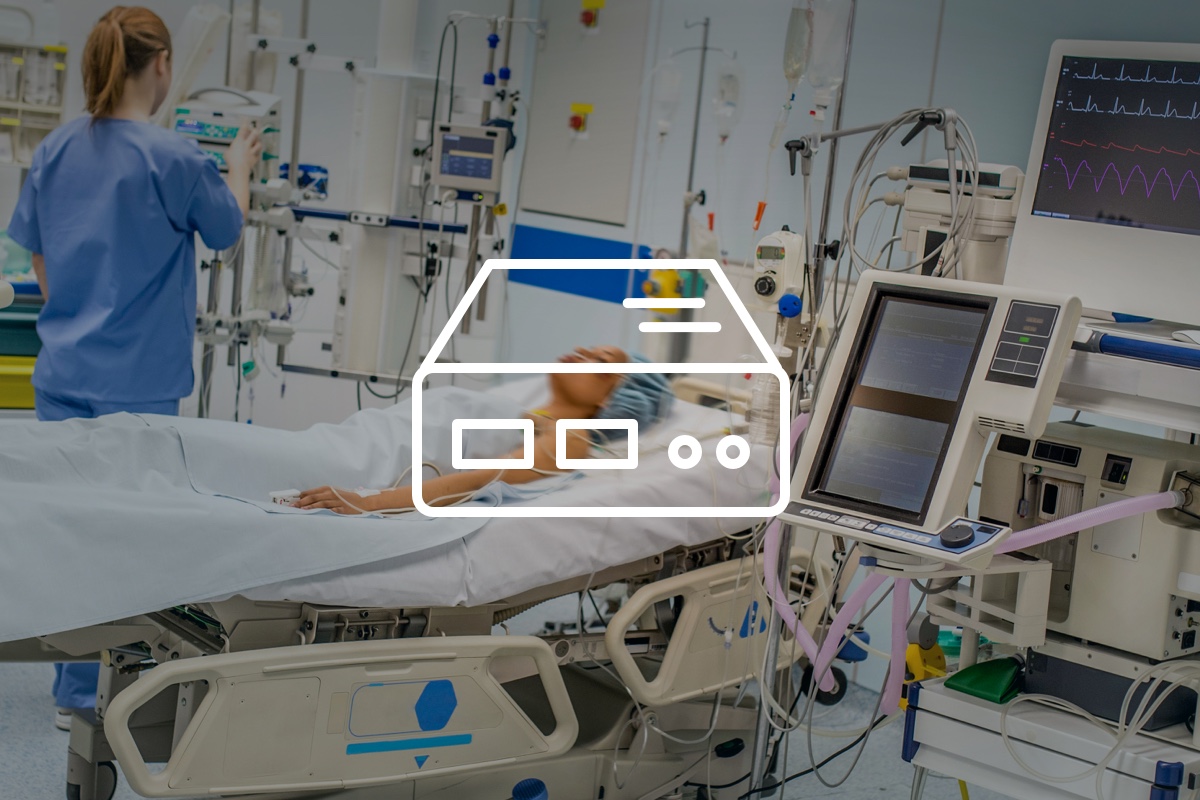
The challenge in healthcare isn’t just access to data; it’s how much effort it takes to keep that data moving.
At its core, medical device integration is the process of connecting bedside devices such as monitors and ventilators directly to clinical systems to automate data capture and support more efficient workflows.
When that connection isn’t seamless, clinicians become the bridge.
- They document what devices have already been captured.
- They double-check what should already be accurate.
- They spend time managing systems instead of focusing entirely on care.
It becomes part of the job, but it was never meant to be.
Device Hub addresses this in a very practical way.
Device Hub is a vendor-neutral medical device integration platform that connects bedside devices to clinical systems, enabling automated data capture and improving workflow efficiency.
It captures data directly from compatible devices, standardizes it, and delivers it to clinical systems in a timely, consistent, and structured way.
But the real value shows up in the moments you don’t notice anymore.
The extra step that disappears. On the second screen, you don’t have to check. The data that’s already there when you need it.
That’s where workflows start to feel different.
Not because they’ve been redesigned, but because friction has been removed.
Without effective medical device integration, workflows depend heavily on the individual. Some clinicians document immediately. Others circle back later. Some double-check everything. Others rely on experience.
That variability creates inconsistency.
With Device Hub, data capture becomes automatic and standardized. It removes the guesswork and helps create a more consistent experience across teams and environments.
It also changes how clinicians use their time.
Instead of pausing to document, they can stay engaged in care. Instead of managing systems, they can rely on them.
That shift is subtle, but it matters.
Because in high-acuity environments, attention is everything.
Every interruption pulls focus away from the patient. Every additional task competes for time and mental energy.
Device Hub reduces that competition.
And it does it without forcing a new way of working.
That’s an important point.
Device Hub doesn’t require clinicians to change their behavior. It works within existing workflows, removing the steps that shouldn’t have been there in the first place.
From an operational standpoint, the impact is just as meaningful.
Care environments are constantly changing. Patients move. Beds are reassigned. Equipment is repositioned.
Device Hub is designed to move with that reality.
It allows for flexible configuration without requiring constant rework. Systems can be managed centrally. Devices can be connected without adding unnecessary complexity at the bedside.
That flexibility supports not just efficiency, but resilience. Because the goal isn’t to create a perfect workflow. It’s to create one that holds up in real conditions.
When data moves automatically, workflows stabilize. When workflows stabilize, clinicians regain focus. When clinicians regain focus, care improves.
Device Hub doesn’t just make workflows faster. It makes them feel manageable again.