

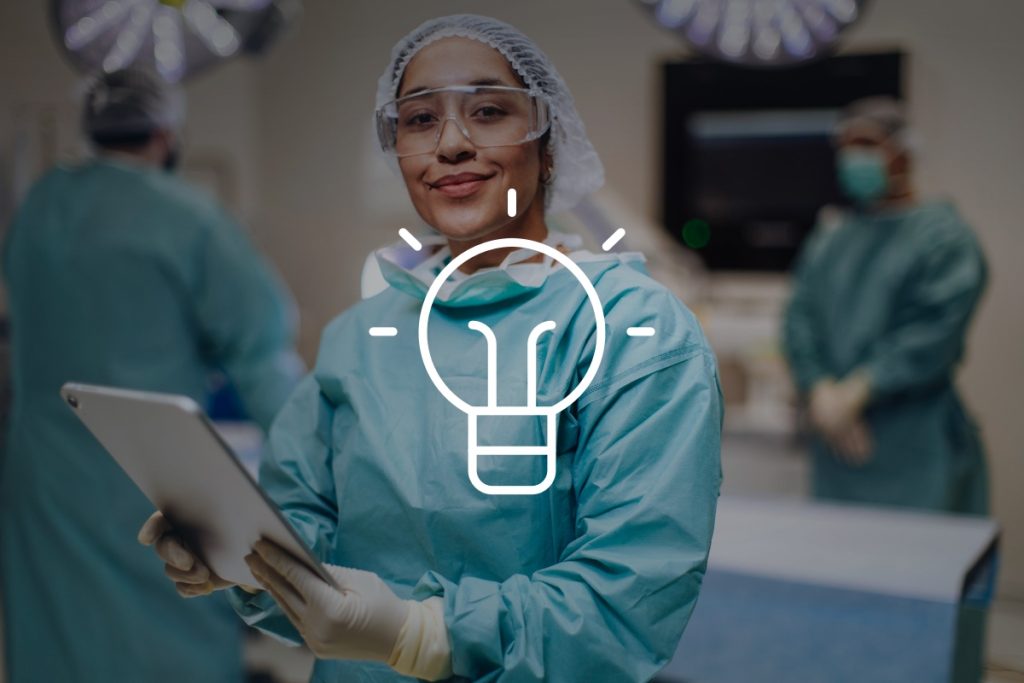
When everyday interruptions become routine, it may be time to rethink how anesthesia documentation fits into the working day.
Anesthesia documentation has a certain irony. Clinicians move between patients, procedures, and responsibilities throughout the day, yet much of their documentation still brings them back to the same place: a workstation. It’s such a familiar part of the routine that it’s easy to overlook.
That’s often how small frustrations become permanent fixtures in a workday. Not because anyone decided they were the best way to do things, but because people learned to work around them.
The Routines We Stop Noticing
When hospitals look for ways to improve clinical workflows, the conversation usually centers on the bigger challenges: staffing, scheduling, operating room utilization, and patient throughput. These are important issues and understandably receive much of the attention. But smaller interruptions can be just as familiar to the people experiencing them.
An anesthesia provider may complete a preoperative assessment, review a patient’s medical history, and prepare for the next case. Each activity involves information that needs review or documentation. When that work requires returning to a workstation, documentation becomes another stop in an already busy schedule.
It’s not necessarily a major inconvenience on its own. The problem is how easily these extra steps become the norm.
Over time, clinicians develop routines around the technology available to them. They remember what to enter later, plan their movements around computer access, and find ways to make the process work. Eventually, the workaround becomes the workflow.
But Anesthesia Is Hardly a Desk Job
Anesthesia providers work across different clinical settings, and their responsibilities don’t always fit neatly around a computer. Of course, workstations remain important. Sometimes a full computer is the right tool for the task. But that doesn’t mean every documentation activity needs to take place there.
The more useful question is whether clinicians have a choice.
Can they access the information they need while moving between responsibilities? Can documentation fit more naturally into the work they’re already doing, rather than requiring another trip back to a computer?
These are practical questions about how technology fits into a clinical environment.
And they’re worth asking, especially when the people using that technology have spent years adapting to its limitations.
Giving Clinicians Another Option
Picis Prima was designed with this kind of flexibility in mind.
Picis Prima is a mobile anesthesia documentation solution that lets providers access patient information and document care using an iPad. Whether working through a preoperative assessment or documenting an anesthetic, clinicians have an alternative to returning to a traditional workstation.
The idea isn’t to eliminate workstations. It’s to give anesthesia providers the flexibility to use the tool that makes the most sense for the task at hand.
That may sound like a relatively modest change, but small adjustments to familiar routines can make a meaningful difference in how clinicians work. Sometimes, it’s simply a matter of questioning a process that has been accepted for years.
Anesthesia providers have always needed to move with their patients and their work. Maybe it’s time their documentation had the same flexibility.
Anesthesia Is Now Mobile
Watch our short video to explore the everyday interruptions in anesthesia documentation and discover Mobile Anesthesia Documentation with Picis Prima.